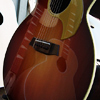
I did the usual strip 'n' sand for a couple of days and it came up real nice. The fretboard looked BLACK and I know Rick doesn't use ebony on these (it was padauk,, judging from the scent as I was sanding it!). So I de-fretted it and was not surprised to find no resistance to the puller. The top layer of wood was pretty far gone. A careful planing and sanding and the board looks like new. This one I sealed to keep sweat and oil out.
These were finished in nitro (pre-'59), so this one will be as well. As I write this, it's in sealer stage, and I'm waiting for some parts and stuff to arrive. It'll receive a new guard in gold alodined aluminum and new bridge cover as well. I'll use new stainless fasteners (unpolished like the originals). It won't look squeaky-clean-new, but it will look charming vintage and gain playability, not to mention inspiration to play.


Next is a 620/12 that I'm converting to a Mike Campbell "Damn the Torpedos" cover guitar for Forum member Glenn Wall. It's a later vintage model than Mike's 620/12, so among the cosmetic changes is a conversion to full-width "swirly" inlays on the fretboard. These I do by hand by first stripping off the neck binding and fretsawing out the edges of the routed inlays.
The wood was chiselled out of the edges and the old inlays removed. They usually come out fairly easily. The two ends of the new inlays are trued up with chisel, file, and sandpaper. This is fairly demanding and delicate work which should be done carefully to achieve the desired effect.
Next, a light gray resin mixture is painted into the inlay recesses and given overnight to cure. A special mixture of clear embedding-grade resin with pearlescent powder is prepared and catalyzed. The components in this system are shown.
More on this later. Meanwhile the 620 has been stripped and is being re-bound and re-fretted. It will be refinished in Amber Fireglo, with a trapeze tailpiece and new guards. It'll be a knockout when completed!


More on both of these later in the week.